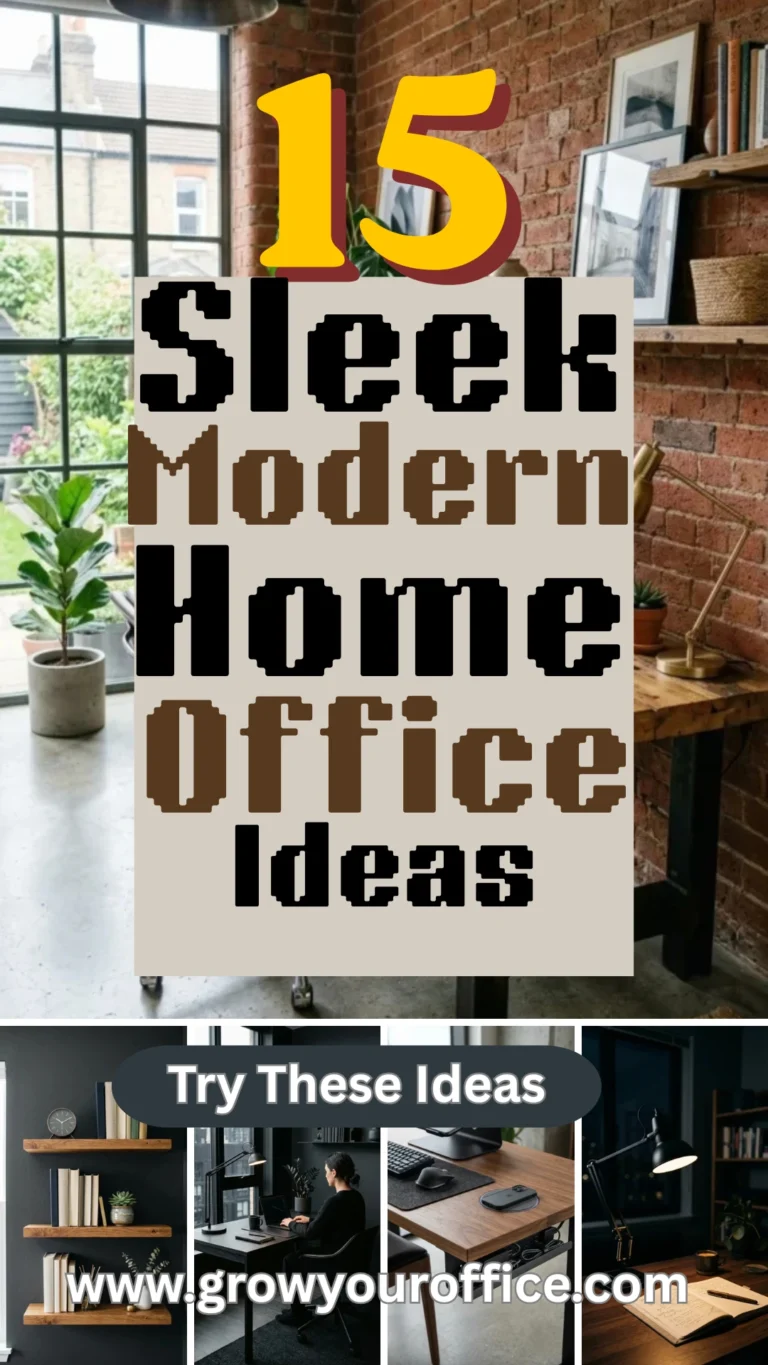

The transition to remote work has transformed the home office from a luxury to a necessity. However, a modern workspace isn’t just about having a place to put your laptop; it’s about creating an environment that fosters focus, inspires creativity, and reflects your personal aesthetic. A sleek, modern design focuses on clean lines, functional furniture, and a clutter-free atmosphere that allows the mind to settle into “deep work” mode.
Whether you have a dedicated room or a small corner in your apartment, these fifteen ideas will help you curate a workspace that is as professional as it is beautiful.
1. Minimalist Desk
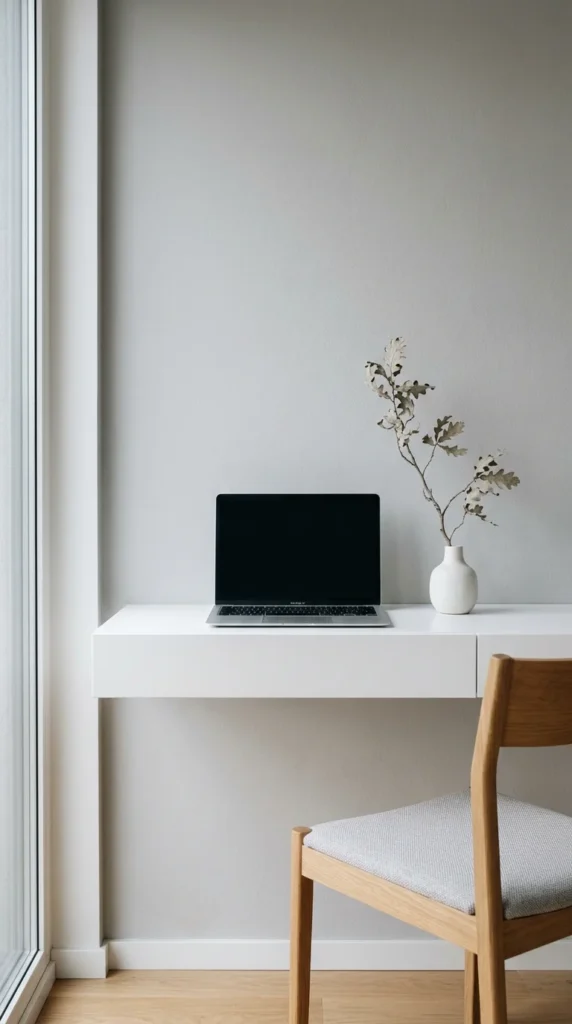
The cornerstone of any modern office is the minimalist desk. Unlike the heavy, ornate executive desks of the past, modern designs prioritize a “less is more” philosophy. Look for desks with thin metal legs, glass tops, or cantilevered designs that appear to float in the air. This aesthetic choice doesn’t just look good; it also keeps the room feeling airy and spacious. By limiting your surface area, you naturally discourage the accumulation of paper stacks and “junk drawers,” forcing you to stay organized and focused on the task at hand.
2. Floating Shelves
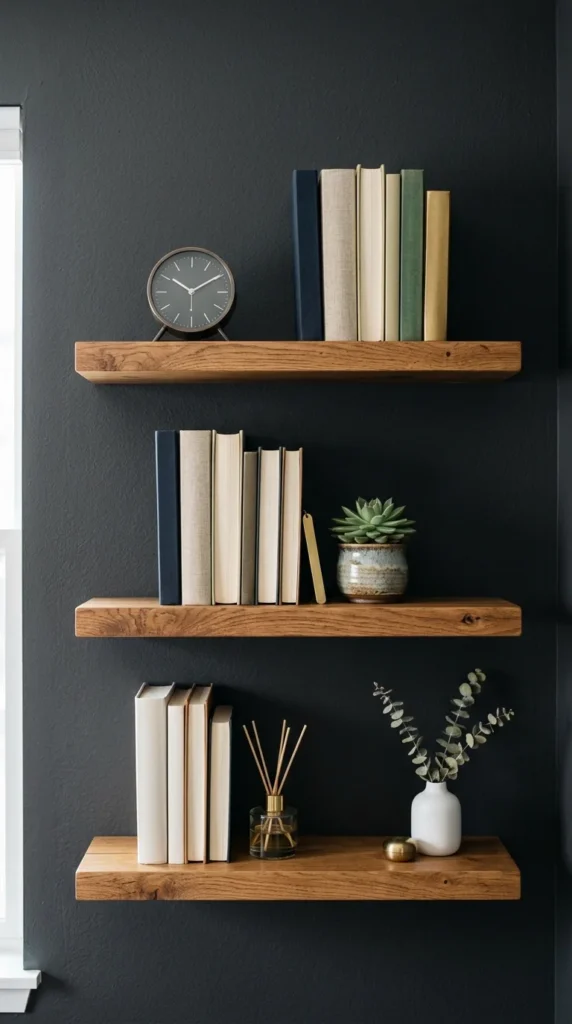
Vertical space is often underutilized in home design. Floating shelves offer a sleek way to store reference books or display curated decor without the bulk of a traditional bookcase. In a modern office, these shelves should be arranged with plenty of “negative space”—don’t overstuff them. Use them to hold items that inspire you, such as architectural models, awards, or a collection of high-quality design books. The lack of visible brackets gives the shelves a seamless, integrated look that complements a contemporary aesthetic.
3. Ergonomic Seating
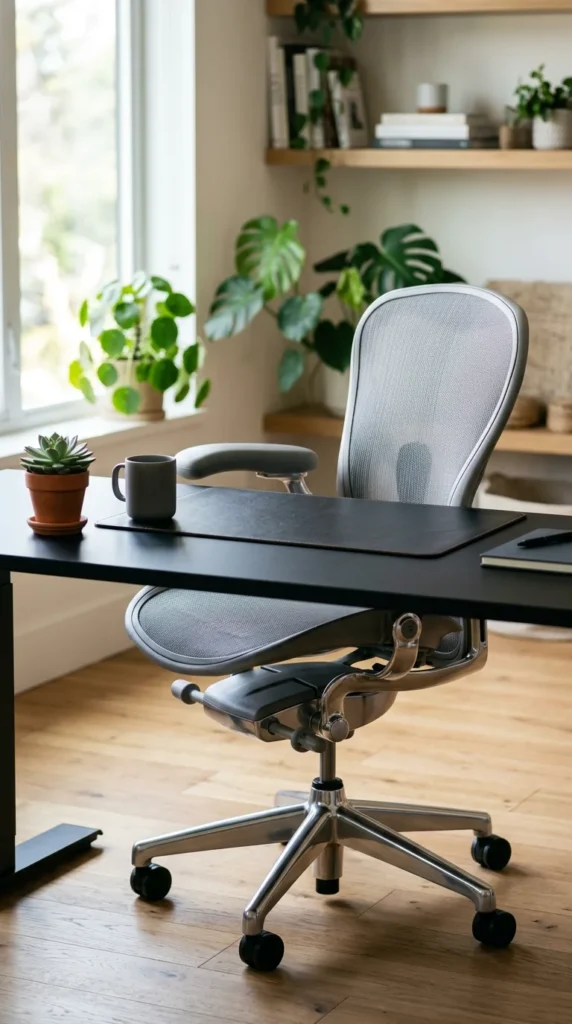
Style should never come at the expense of your health. A modern home office requires a chair that is as supportive as it is stylish. Move away from the bulky, overstuffed leather “boss” chairs and look for pieces that feature breathable mesh, adjustable lumbar support, and polished metal accents. Modern ergonomic chairs often come in neutral palettes like slate, cream, or matte black, allowing them to blend seamlessly into the room’s decor while providing the physical support necessary for an eight-hour workday.
4. Monochromatic Palette
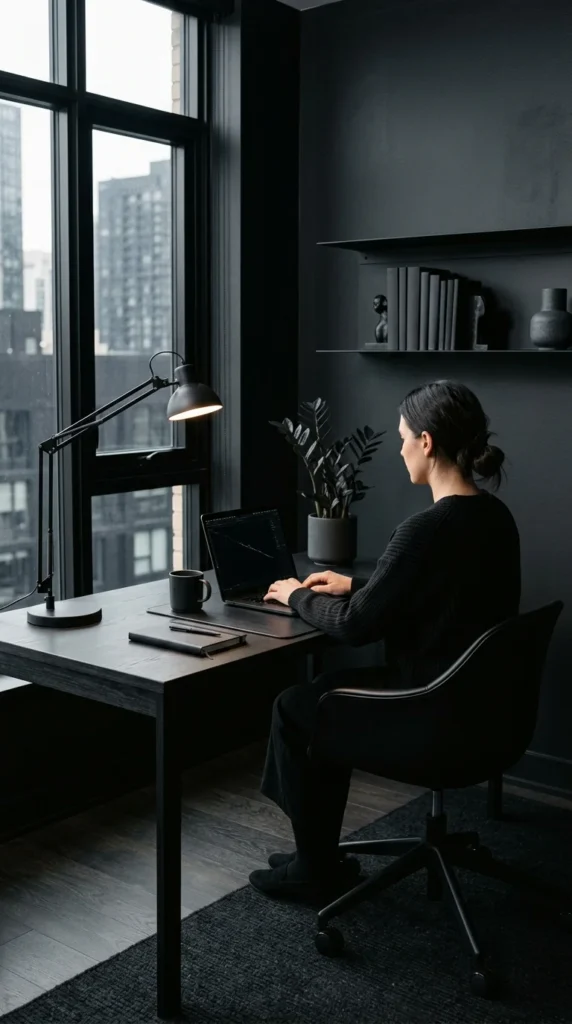
For a truly sophisticated and high-end feel, consider a monochromatic color scheme. Whether it’s an “all-white” sanctuary or a “moody noir” den, using various shades of a single color creates a sense of harmony and reduces visual distractions. In a dark-toned office, different textures—such as a matte desk paired with a glossy lamp—add depth. A monochromatic space feels intentional and polished, instantly elevating the professionalism of your home workspace.
5. Natural Light
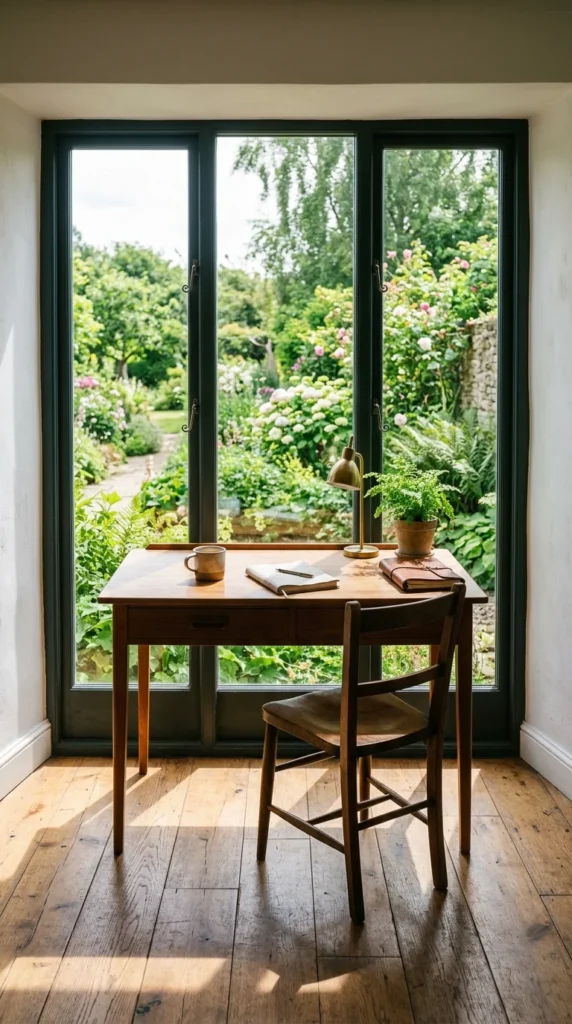
No amount of high-end lighting can replicate the benefits of natural sunlight. In a modern office, the desk is often positioned to maximize window views. Natural light boosts Vitamin D, regulates your circadian rhythm, and keeps you alert throughout the afternoon slump. To maintain a sleek look, avoid heavy drapes. Instead, opt for sheer rollers or motorized solar shades that protect your screen from glare while still allowing the beauty of the outdoors to penetrate the space.
6. Integrated Tech
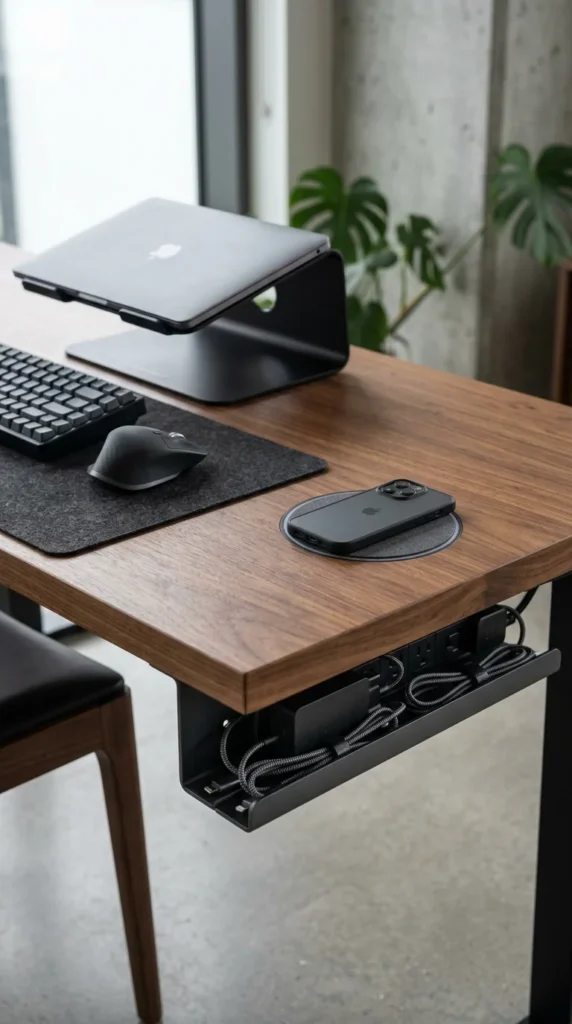
The enemy of the modern aesthetic is “cable spaghetti.” A sleek office prioritizes hidden technology. This includes desks with built-in grommets for wire routing, wireless charging pads embedded in the desktop, and monitors with “one-cable” USB-C connectivity. When your hardware is integrated seamlessly, the workspace feels futuristic and clean. Consider under-desk mounting for CPUs or hard drives to keep the floor clear and the visual lines uninterrupted.
7. Biophilic Accents
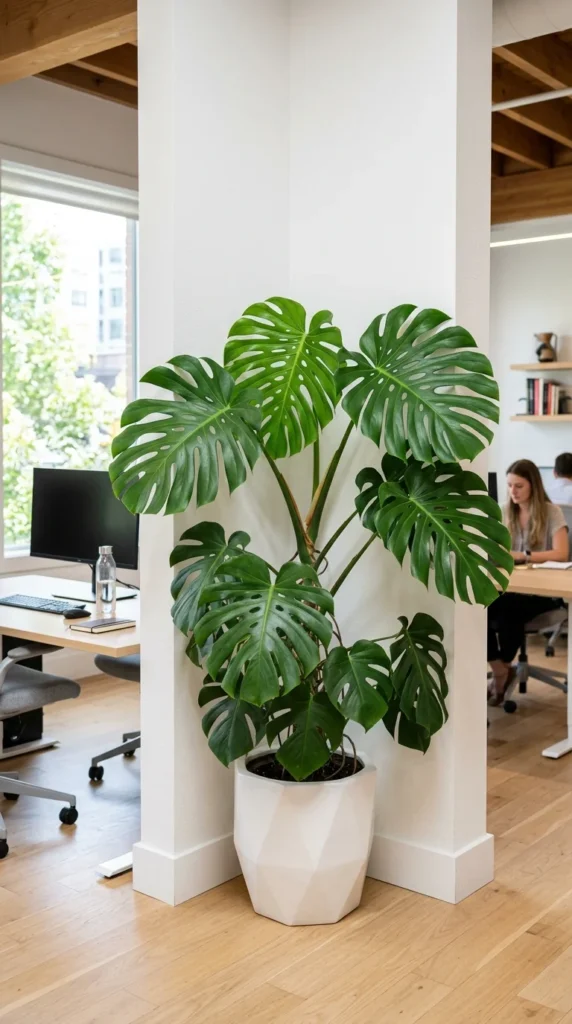
Biophilic design—the practice of connecting people with nature—is a staple of modern interior trends. Adding greenery to your office isn’t just about aesthetics; plants are known to improve air quality and reduce stress. For a sleek look, choose plants with bold, architectural shapes, such as a Snake Plant, a Fiddle Leaf Fig, or a collection of geometric succulents. Place them in matte ceramic or concrete pots to maintain the contemporary vibe.
8. Glass Partition
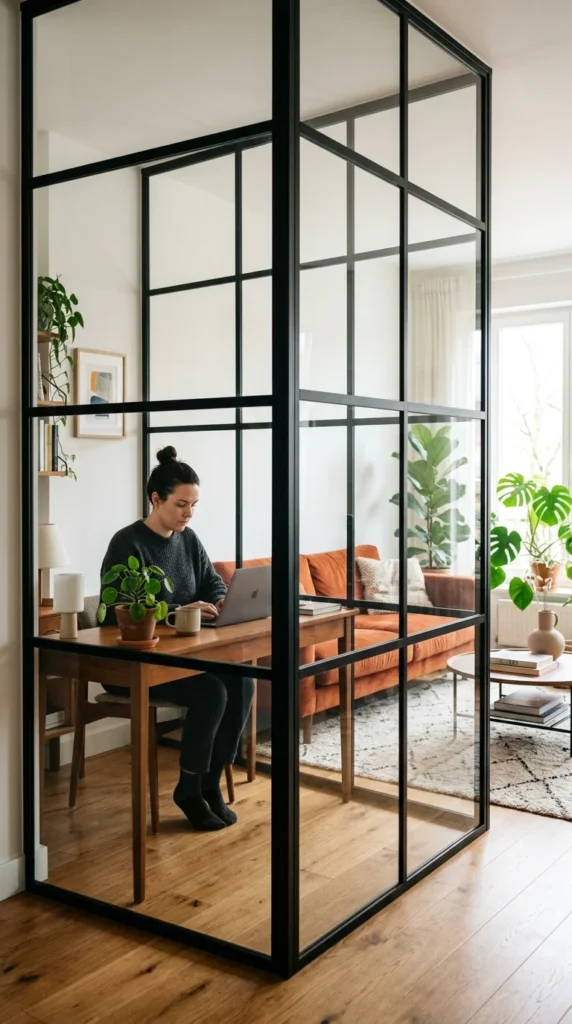
If your office is part of a larger open-plan living area, a glass partition is a brilliant way to define the space without closing it off. Using “Crittall-style” windows or simple frameless glass panels allows you to enjoy the spaciousness of your home while creating a physical and acoustic barrier for phone calls and focused sessions. It creates a “room within a room” that feels high-end and architecturally significant.
9. Moody Lighting
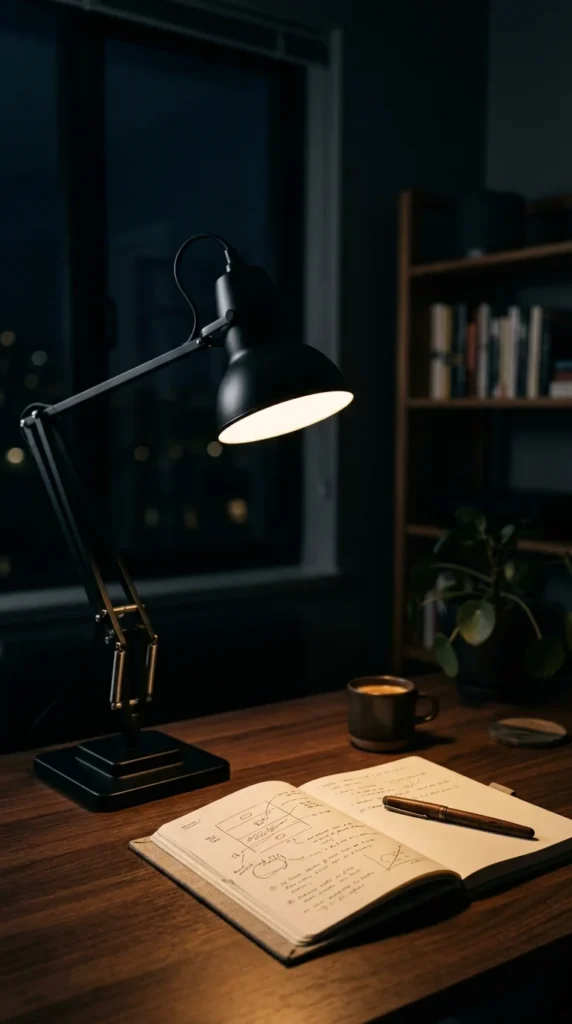
Modern lighting is about layers. Beyond the standard overhead light, a sleek office utilizes task lighting and accent lighting to create atmosphere. A slim, LED swing-arm lamp is perfect for late-night projects, while LED strips behind the monitor or under shelves can provide a soft, ambient glow that reduces eye strain. Choose fixtures with matte finishes or metallic accents like brushed brass or gunmetal to add a touch of industrial luxury.
10. Corner Nooks
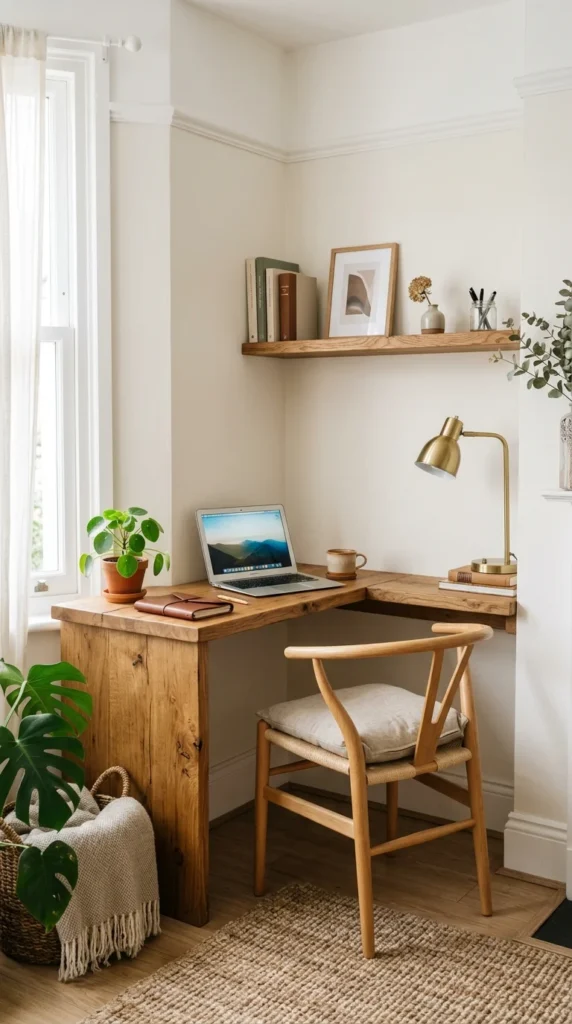
Not everyone has a spare bedroom to convert into an office. The modern approach to small spaces is the “Cl ऑफिस” (closet-office) or the corner nook. By using custom-built shelving or a small L-shaped desk, you can transform an awkward corner into a powerhouse of productivity. The key to making a corner office look sleek is keeping it highly organized; every item should have a dedicated spot, and the color palette should match the surrounding room to keep the flow consistent.
11. Statement Art
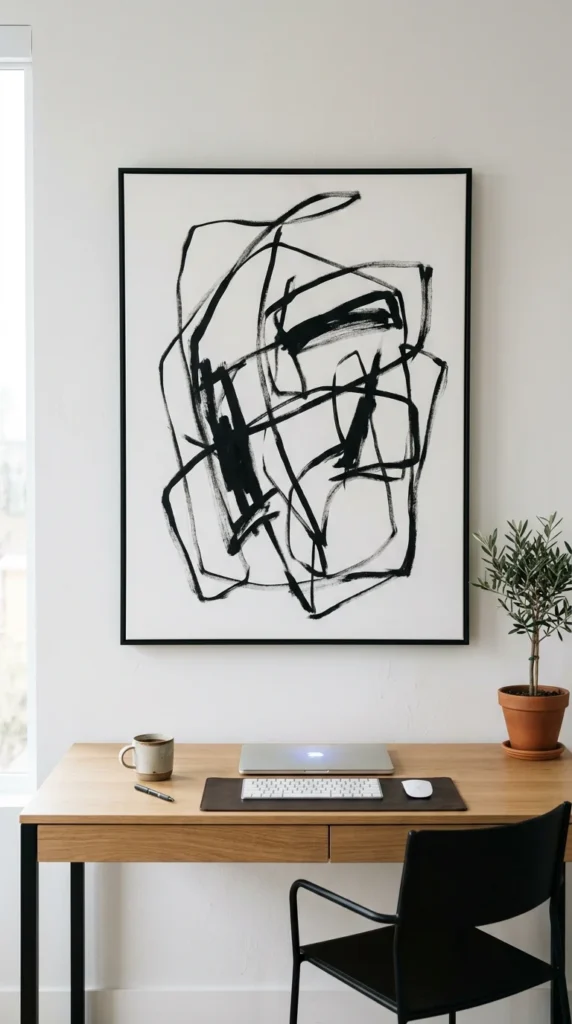
A modern office should never feel sterile. A single piece of large-scale statement art can provide a focal point and inject personality into the room. Avoid “gallery walls” which can look cluttered; instead, choose one bold piece—an abstract painting, a high-contrast photograph, or a graphic print—that resonates with you. This adds a layer of sophistication and serves as a great conversation starter during video conferences.
12. Hidden Storage
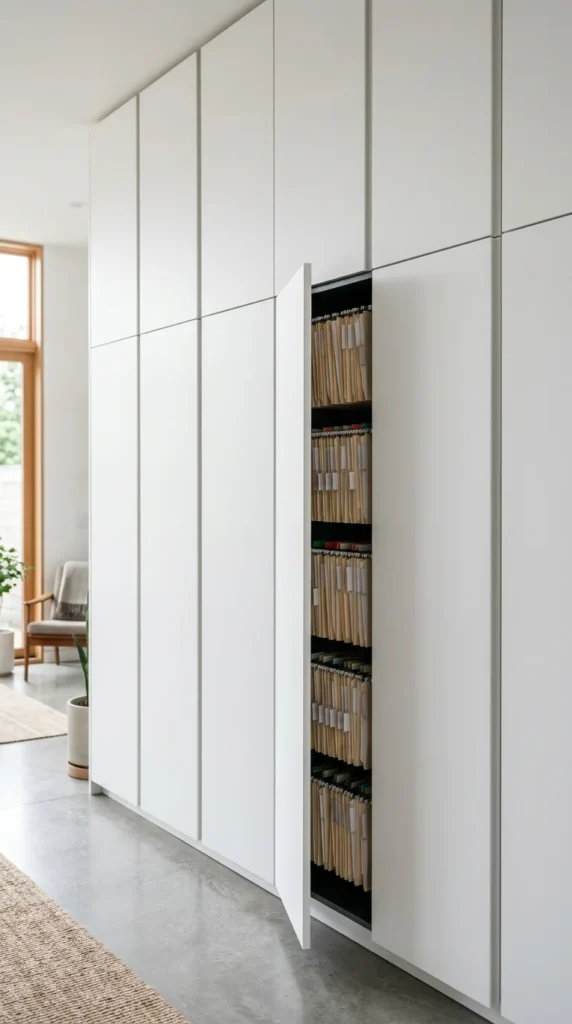
To maintain a sleek, modern look, you need a place to hide the “boring” stuff—printers, paper reams, and filing folders. Hidden storage is the secret weapon of modern designers. Built-in cabinetry with “push-to-open” latches creates a seamless wall of storage that looks like architectural paneling. When the clutter is tucked away behind closed doors, your mind is free to focus on the work in front of you.
13. Industrial Elements
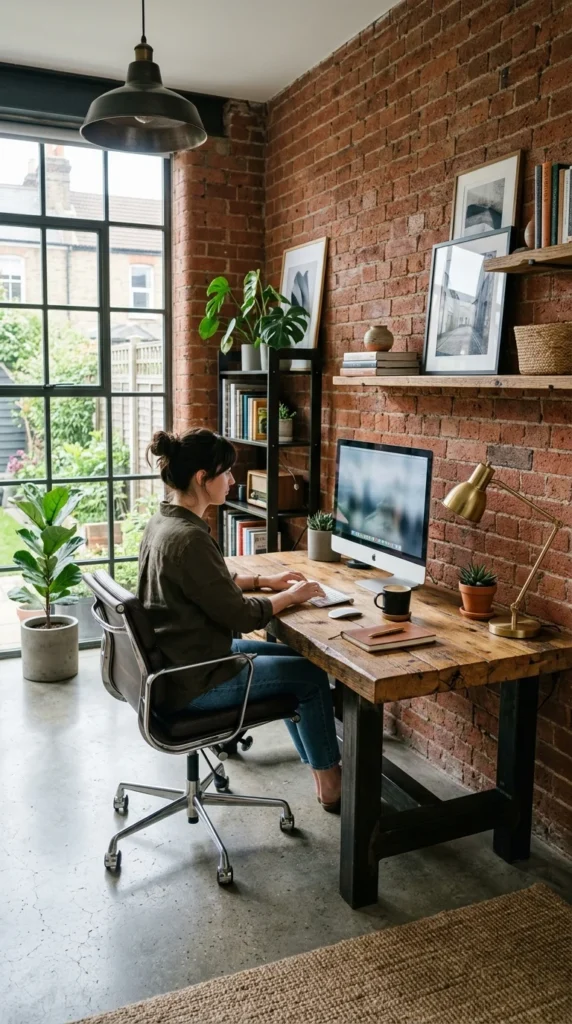
For those who prefer a more “edgy” modern look, industrial elements are the way to go. Mixing raw materials like concrete, steel, and reclaimed wood creates a workspace that feels robust and creative. You can achieve this by choosing a desk with an I-beam base or installing a metal mesh grid on the wall for hanging notes and blueprints. The contrast between cold metal and warm wood provides a balanced, dynamic atmosphere.
14. Standing Desks
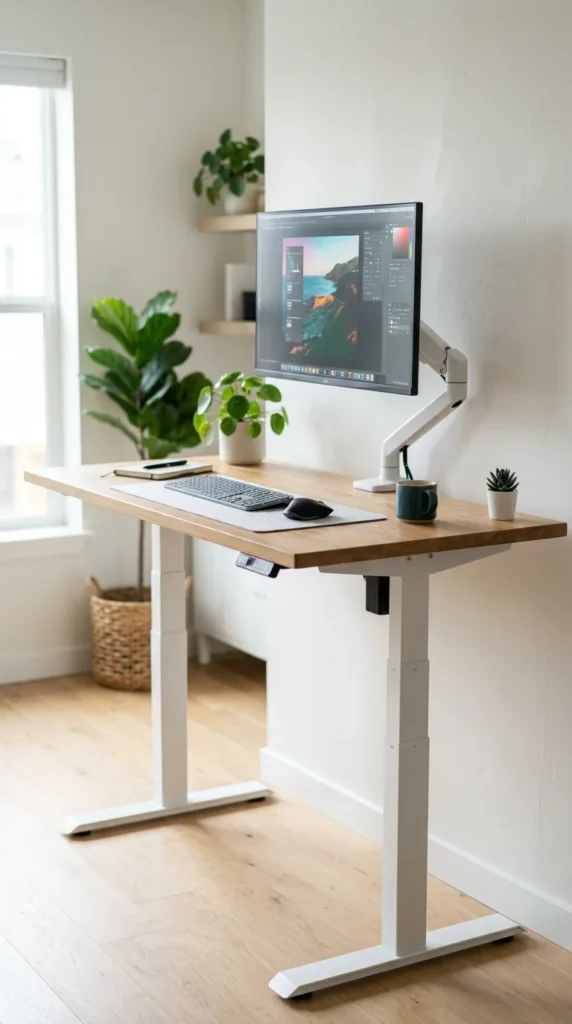
standing desks are the epitome of modern minimalism. By removing the legs, you create a sense of visual lightness that makes even the smallest room feel airy. This design choice is particularly effective in compact apartments where floor space is at a premium. Beyond the aesthetic appeal, floating desks allow for easier cleaning and provide a customizable height, making them a favorite for those who want a bespoke ergonomic setup.
15. Corner Nooks
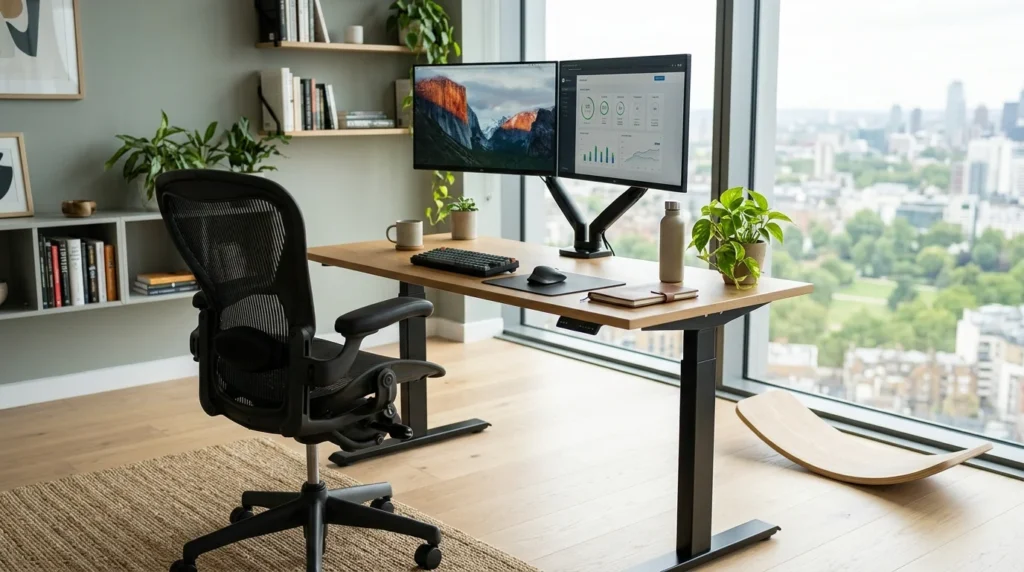
Not everyone has a spare room to dedicate to a home office, but modern design excels at optimizing small spaces. A “cloffice” (closet office) or a dedicated corner nook can be just as effective as a full room if designed correctly.
The secret to a successful corner nook is scale. Choose a desk that fits the proportions of the corner perfectly, and use vertical space for storage to keep the footprint small. Use a rug to “ground” the area, visually separating the office nook from the rest of the room. By keeping the color palette consistent with the surrounding area, the nook feels like a deliberate design choice rather than a cluttered afterthought.