
A small office makes every placement decision twice as important. Put a plant in the wrong spot and it blocks the window light you depend on, crowds your screen, or slowly leans toward the light until it topples. Put it in the right spot and the room feels greener without feeling smaller, and the plant itself stays healthy instead of stretching toward the glass.
The trick is to think about light in two directions at once: the light your room needs, and the light each plant needs. This guide walks through the best places to put plants in a small office, the places to avoid, and how to use height, corners and walls so your plants get enough light without stealing yours.
Quick Answer
Put plants beside the window rather than in front of it, in unused corners, on shelves and wall brackets, and on top of storage, keeping the direct path of window light into the room clear. On the desk itself, keep plants small and to the sides, never between you and the window. Tall plants belong on the floor in corners, trailing plants belong up high, and light-hungry plants get the spots nearest the glass.
Start With the Light Path
Before placing a single pot, look at how daylight moves through your office. Light enters at the window and spreads into the room, weakening with every metre. Anything tall or wide placed directly in front of the window casts a shadow over the rest of the room, including your desk.
So the first rule is simple: keep the window opening itself clear. Plants can frame a window from the sides, sit below the sill, or hang above eye level, but a big plant centred on the glass is dimming your whole office. This matters even more in rooms that already struggle for brightness, where the layout and curtain fixes in our guide to window glare on your screen show how much difference unblocked, well-managed light makes to a small workspace.
The Best Spots, From Safest to Boldest
Beside the window, not in front of it
The strip of floor or desk space just to the side of a window is prime plant territory. The plant receives strong light from one side, and the room keeps its daylight. A medium floor plant here softens the window edge without casting a shadow across your desk. Turn the pot a quarter turn each week so it grows evenly.
Below the windowsill
A low shelf, crate or plant stand under the window puts plants in bright light while leaving the view and the light path open, as long as the plants stay below sill height. This suits compact plants that would otherwise fight for desk space.
Empty corners
Every small office has a corner that does nothing. A tall plant on the floor there adds height and green without touching your light or your desk. Corners away from the window are dim, so choose shade-tolerant plants for them, or accept slower growth and rotate the plant to a brighter spot every few weeks.
Shelves, walls and the tops of storage
Trailing plants such as pothos belong on high shelves and on top of bookcases and cabinets, where their leaves can fall freely and they take up zero desk space. Wall brackets and hanging planters work the same way. Just keep hanging plants high enough that you are not ducking under them, and never hang a pot where it shades the desk below like an umbrella.

Placing Plants on the Desk Itself
Desk space in a small office is precious, so desk plants must earn their place. Keep them small, keep them to the sides, and keep them out of the light path between the window and your work area. A compact plant at the back corner of the desk, beside the monitor or at the far end of a shelf above the desk, adds green to your eyeline without crowding your keyboard or notebook.
Our guide to small desk plants that do not take over your workspace compares compact choices that stay tidy. Whichever you choose, keep the pot on a saucer, leave room to actually work, and avoid any plant whose leaves arch over your screen or keyboard. If a desk plant keeps creeping into your working space, it is not badly behaved; it is badly placed, and a shelf or stand will suit it better.
Match Each Plant to the Light of Its Spot
Placement fails most often because the plant and the spot disagree about light. Bright spots near the glass suit plants that like sun and grow fast. Dim corners suit slow, shade-tolerant plants. Put a sun-lover in a dark corner and it stretches, pales and leans. Put a shade plant on a sunny sill and its leaves can scorch.
Work out the light honestly for each spot you plan to use. The side of the room opposite the window may look bright to you and still be low light for a plant. If a spot gets almost no natural light at all, treat it as a no-light position and follow the approach in our guide to plants for an office with no natural light: tolerant plants, a small grow light, rotation, or a good fake.
Height, Balance and Keeping the Room Feeling Open
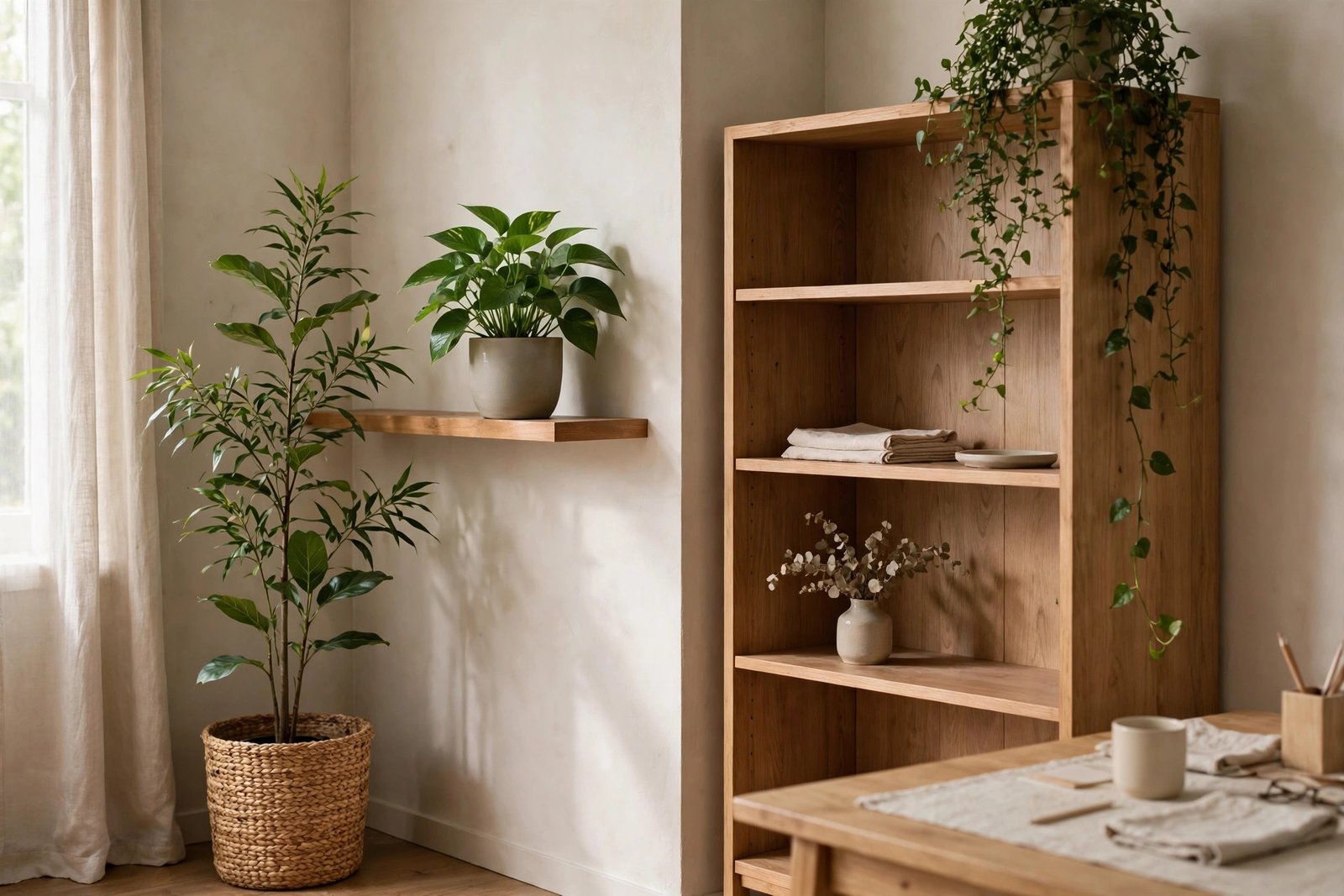
A room with all its plants at one height feels flat. Mix levels instead: one taller floor plant, something at desk height, and something trailing from above. Odd numbers group well, so three plants at three heights read as a deliberate arrangement rather than a queue of pots.
Keep the balance calm. In a small office, one or two generous plants usually look better than ten tiny pots scattered on every surface, and they are easier to water. Repeat one or two pot colours or materials so the group looks planned. Finally, leave breathing room around each plant. Leaves pressed against a wall, a screen or another plant trap damp air and invite problems; a few centimetres of space costs nothing and keeps plants healthier and tidier.
Mistakes to Avoid
- Centring a tall plant on the window. It shadows the whole room. Move it to the side of the window instead.
- Letting a plant shade your desk lamp or screen area. A trailing plant above the desk can dim your work light and add glare problems.
- Putting sun-loving plants in dark corners. They stretch and lean toward the light and slowly lose their shape.
- Filling every surface with small pots. Cluttered surfaces make a small office feel smaller and watering becomes a chore.
- Wedging plants between the monitor and the window. They block your light and end up pushed aside or knocked over.
- Forgetting the saucer. Water marks on desks and shelves are the fastest way to fall out of love with office plants.
Frequently Asked Questions
Can I put a plant on the windowsill itself?
Yes, if it stays small and low. A compact plant at one end of the sill, below the top of the glass, takes little light from the room. Avoid a row of tall plants across the whole sill, which acts like a curtain and dims everything behind it.
How far from the window can a plant still get enough light?
It depends on the plant. Tolerant plants such as snake plants and pothos manage a few metres from a bright window, growing slowly. Light-hungry plants need to be within about a metre of the glass. Watch the plant: long gaps between leaves and a hard lean toward the window mean the spot is too dark.
Where should a tall plant go in a small office?
On the floor in a corner or beside the window frame, where it adds height without crossing the light path or the walkway. Keep it out of the route between the door and your chair, and give the leaves room so they do not brush your screen or shelves.
Is it okay to hang a plant above my desk?
Yes, if it hangs high and to one side, clear of your head and not directly between your desk lamp and your work surface. Choose a trailing plant in a secure hanger, and water carefully, or lift the pot down to water it and let it drain before hanging it back.
Conclusion
Good plant placement in a small office is mostly about protecting the light. Keep the window path clear, use the sides, corners, shelves and tops of storage, and match each plant to the light of its spot. Done well, your office gains green at every height, your desk keeps its space and daylight, and your plants stop leaning, stretching and sulking.

1 thought on “Where to Put Plants in a Small Office Without Blocking Light”