
You like having plants in your office. You just forget they exist somewhere between the third meeting and the next deadline. Then comes the familiar scene: a sad, crispy plant, a pang of guilt, and another trip to buy a replacement that will probably meet the same fate.
It does not have to work that way. The problem is rarely you. It is the match between the plant and your routine. Some plants need weekly attention. Others store their own water, grow slowly, and wait calmly for weeks until you remember them. Choose the second kind, set them up so each watering lasts longer, and build one tiny routine. That is the whole system.
Quick Answer
The best low-maintenance office plants for people who forget them are the snake plant, ZZ plant, pothos and cast iron plant, because they store water and grow slowly. Plant them in pots with drainage and a little extra room, water deeply only when the soil is dry, and keep all your plants together in one spot so one short weekly glance covers them all. Set up this way, most of these plants need you for about five minutes a month.
What Makes a Plant Forgiving
Forgiving plants share a few traits, and once you know them you can judge any plant in a shop in seconds.
- They store water. Thick leaves, thick stems or chunky underground storage roots act like a tank, carrying the plant through your busy weeks.
- They grow slowly. Slow growth means slow water use, and a plant that barely changes does not punish a missed month.
- They tolerate varied light. A forgiving plant copes if its spot is brighter or dimmer than ideal, instead of sulking.
- They show clear signals. The best forgetful-person plants look obviously thirsty before they are in real trouble, giving you time to act.
The Most Forgiving Office Plants
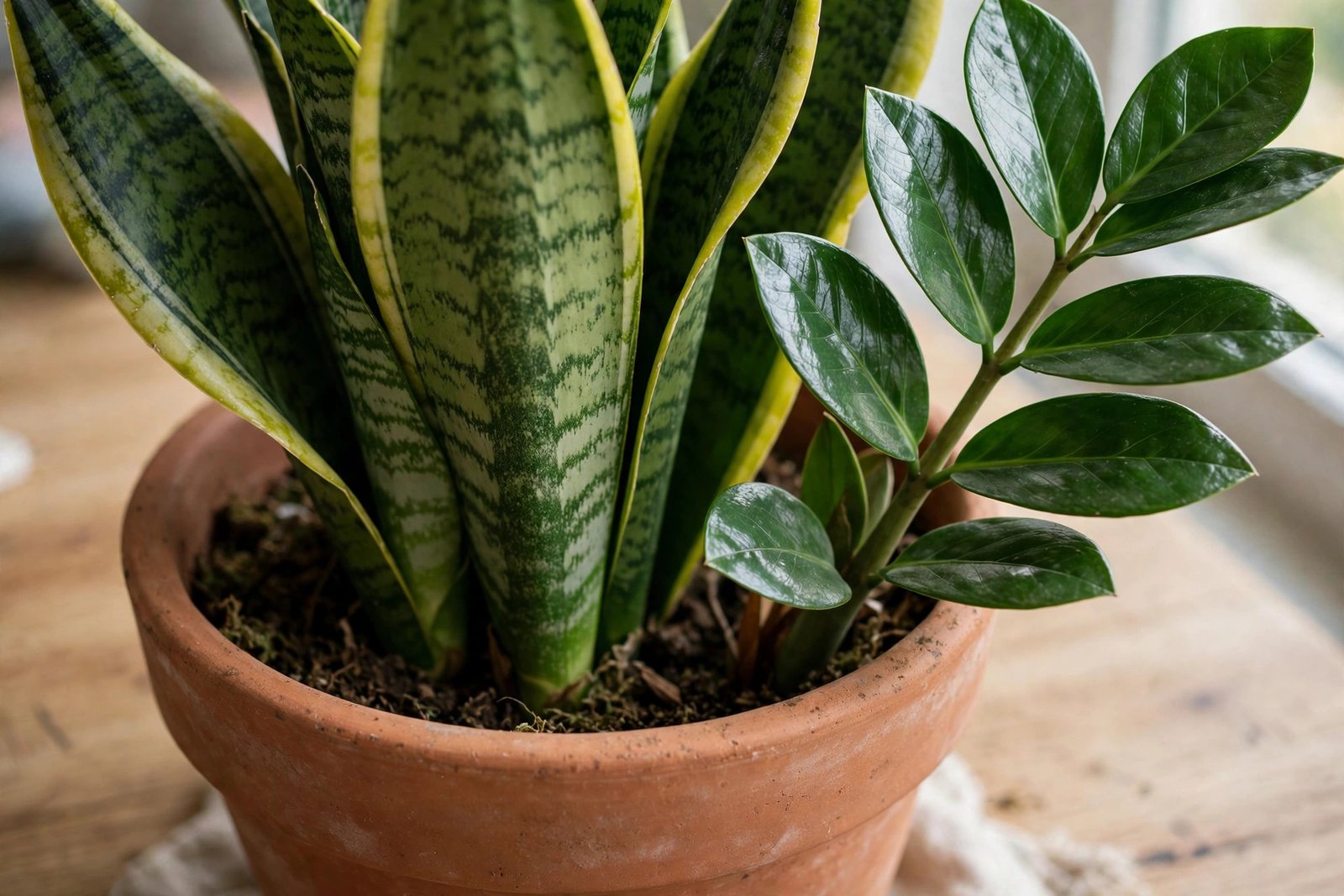
Snake plant
The classic forget-proof plant. Its stiff, thick leaves hold a lot of water, it tolerates low light and bright light, and it can go a month or more between waterings in a cool office. Its one weakness is kindness: watered too often, its roots rot. For a forgetful owner, that weakness is actually a strength.
ZZ plant
Glossy, upright and unbothered. The ZZ plant stores water in thick underground stems, grows slowly, and handles dim corners that defeat other plants. It asks for water rarely and warns you slowly and gently if you forget for too long.
Pothos
A friendly trailer that wilts visibly when thirsty and perks up within hours of a drink, which makes it the most reassuring plant for beginners. It grows faster than the others, so it uses water faster too, but its clear signals mean you rarely forget it past the point of recovery.
Cast iron plant
Slow, dark-green and famously tolerant of neglect, low light and irregular watering. It is not showy, but it may be the hardest common office plant to kill through forgetfulness alone.
Plants to avoid if you are forgetful: ferns, calatheas and most small succulents in tiny pots. Ferns and calatheas want steady moisture and fade fast when it lapses. Tiny pots of any kind dry out in days. Forgiving is a combination of the plant and the pot, not the plant alone.
Set the Plant Up to Survive Your Schedule
A good setup can double the time between waterings, which matters more than any reminder app.
- Choose a pot with drainage holes, inside a simple outer pot or on a saucer. Roots sitting in water rot; roots in drained soil wait patiently.
- Go one size up. A slightly larger pot holds more soil, and more soil holds more moisture and dries more slowly and evenly than a cramped small pot.
- Consider a self-watering pot for your thirstiest plant. A small reservoir at the base stretches one watering across extra days. It suits pothos well; use plain pots for snake plants and ZZ plants, which prefer to dry out.
- Keep plants away from heat sources. A plant beside a radiator or in a hot sun patch dries in half the time and turns low-maintenance into high-maintenance.
One Tiny Routine That Replaces Memory
Forgetful people do not need more discipline. They need a routine so small and so well attached to an existing habit that it runs itself.
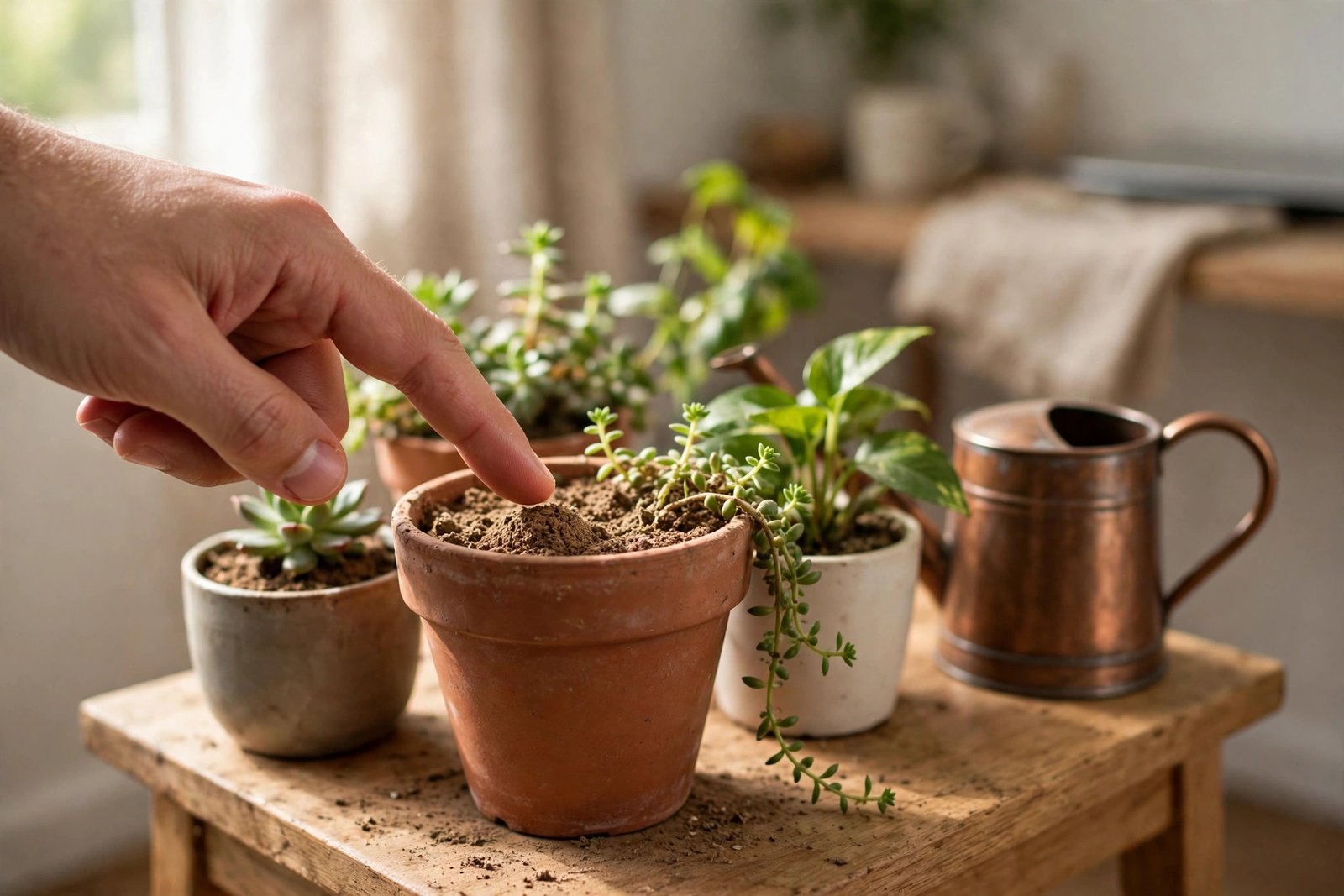
Group all your office plants in one area instead of scattering them around the room. Then pick one anchor moment each week, such as the first coffee on Monday or the last five minutes on Friday, and give the group a single glance. Check each pot with a fingertip: if the soil is dry a few centimetres down, water that plant deeply. If it is still damp, leave it. Most weeks, most plants need nothing, and the whole check takes two minutes.
Getting the watering decision itself right still matters, because overwatering forgiving plants is the one reliable way to kill them. Our guide on how often to water office plants explains the simple soil check in full. Keep a small watering can near the plant group, not in another room, so the job has no friction. And for holidays, move the group to your coolest, shadiest spot, water well before you leave, and most of these plants will simply wait for you.
Plants, Placement and Light: Keep It Simple
Forgiving plants still have one real need: some light. The most tolerant choices cope with the dim side of a room, but a plant in a truly dark spot declines no matter how tough it is. If your desk sits far from the window, our comparison of the best low-light plants for a desk will help you match the plant to the spot. Keep the group in one place with the best light you can offer, and the whole system, plant, pot and routine, starts working together.
One more honest note: even the toughest plant is a living thing with limits. Low-maintenance means weeks of forgiveness, not months of total neglect. If your job genuinely takes you away for long stretches, keep just one or two plants rather than a shelf full, and look after those well. A small group you can keep alive beats a large collection you watch fade, and a neglected, permanently damp pot can even bring its own small annoyances, such as the soil flies covered in our guide to a desk plant that attracts gnats.
Mistakes to Avoid
- Buying thirsty plants and hoping to change. Ferns and calatheas will not adapt to your routine. Choose plants that fit the routine you already have.
- Watering everything every week “just in case”. Snake plants and ZZ plants die from this kindness. Water only when the soil check says dry.
- Using tiny pots. Small pots dry out in days and turn every plant into a high-maintenance plant.
- Scattering plants all over the office. Out of sight means out of mind. One group in one place gets checked; five lone plants get forgotten.
- Placing plants next to radiators or hot windows. Heat doubles water use and quietly cancels the plant’s natural forgiveness.
- Setting reminders but keeping the can far away. If watering means a trip to another room, you will postpone it. Keep the tools with the plants.
Frequently Asked Questions
Which office plant can go the longest without water?
A mature snake plant in a decent-sized pot can often go a month or more, especially in a cool office and lower light, because its thick leaves store water. A ZZ plant is close behind. Exact timing depends on pot size, soil and room heat, so use the soil check rather than the calendar.
How many plants can a forgetful person realistically keep?
Start with two or three forgiving plants grouped in one spot. That is enough green to change how the office looks, and few enough that one two-minute weekly glance covers all of them. Add more only when the routine feels automatic.
Are self-watering pots a good idea?
For some plants, yes. They suit pothos and other plants that like steady moisture, stretching each watering by days. They are a poor match for snake plants and ZZ plants, which prefer their soil to dry out between drinks and can rot if kept constantly damp.
What should I do with my plants when I go on holiday?
Water them well just before you leave, move them to the coolest, shadiest spot you have, and group them together. Forgiving plants in good-sized pots handle two to three weeks this way without any help. For longer trips, ask someone to do one single watering in the middle rather than a complicated schedule.
Conclusion
Low-maintenance office plants succeed when the plant, the pot and the routine all forgive you together. Choose storers like the snake plant, ZZ plant, pothos or cast iron plant, give them drained, slightly larger pots and one shared spot with decent light, and check them once a week with a fingertip. That small system keeps office plants alive on about five minutes of attention a month, even for people who forget them.
