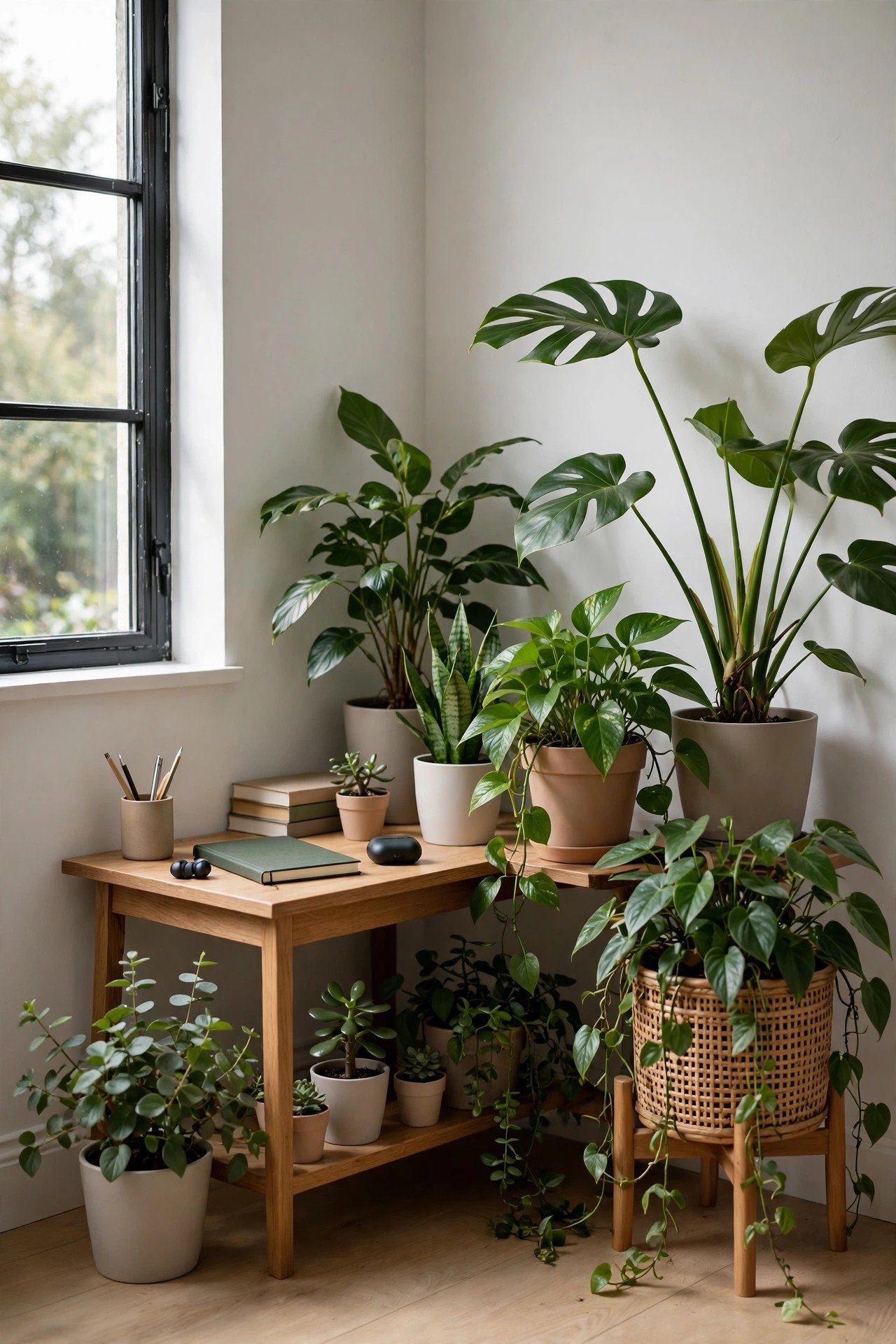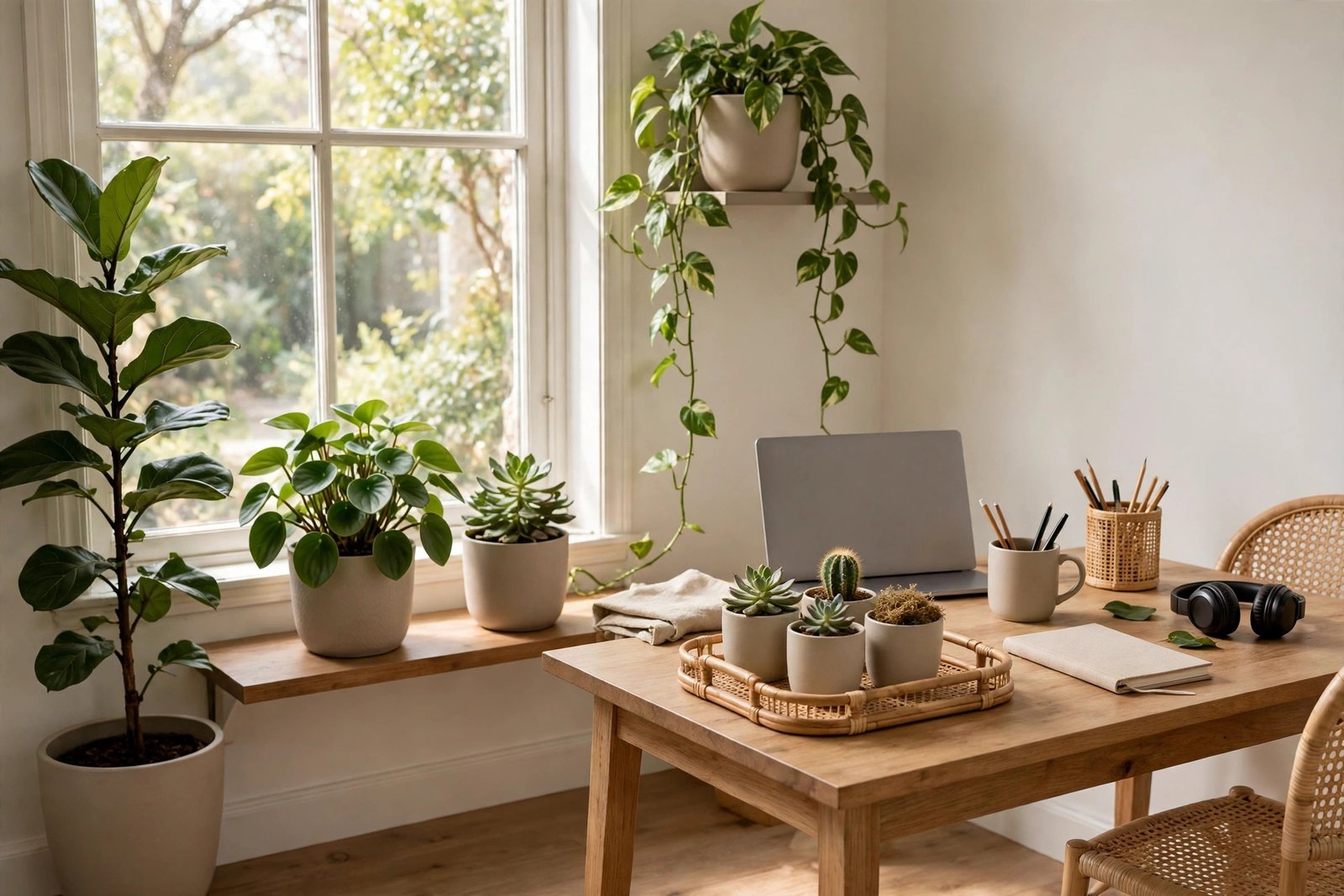
A single plant on a desk is a nice touch. A green office corner is a feature — a small, deliberate cluster of plants that makes the workspace look settled and cared for. The catch is that plant corners easily slide into mess: pots of every size and colour, soil on the shelf, a trailing stem swallowing the lamp, and nowhere left to put your notebook.
The difference between a lush corner and a jungle is not the number of plants. It is structure. This guide shows how to build a green office corner with layers, matching pots and simple habits that keep it tidy week after week, using plants you probably already own.
Quick Answer
To create a green office corner that stays tidy, choose one corner with light your plants can actually use, group three to five plants there instead of scattering them, and build in layers: one tall plant, one or two medium plants, and one trailing plant. Keep pots in one or two finishes, stand them on trays to protect surfaces and catch drips, and keep a small, hidden care kit nearby. A two-minute weekly tidy — wipe leaves, remove dead ones, rotate, water — is what keeps the corner looking arranged instead of overgrown.
Choose the Corner Before You Buy Anything
The best corner is the one with usable light, not the emptiest one. Stand at your desk and look for a corner that gets bright, indirect light for most of the day — beside a window rather than directly on a hot sill, or in the light a nearby window throws across the room. Plants grouped in a dark corner will slowly stretch and thin out, and no arrangement trick fixes a light problem.
Our guide on where to put plants in a small office without blocking light covers placement in detail, including how to keep leaves out of your screen’s light path. For the corner itself, also check the practical points: a socket is not needed, but floor or shelf space for a tall plant is, and the corner should not block a door, a drawer, or the route to your chair.
Group Plants Together Instead of Scattering Them
One plant here and one plant there reads as clutter. The same plants gathered in one corner read as a display. Grouping also makes care simpler: one trip with the watering can instead of a tour of the room, and one spot to check for dropped leaves.
A corner of three to five plants is plenty for most home offices. More than that and the corner starts competing with your desk for space and attention. If you already own more plants than the corner holds, keep the healthiest and best-shaped ones in the corner and move the rest to another room — or accept a second, smaller group on a shelf rather than endlessly expanding this one.
Build the Corner in Three Layers
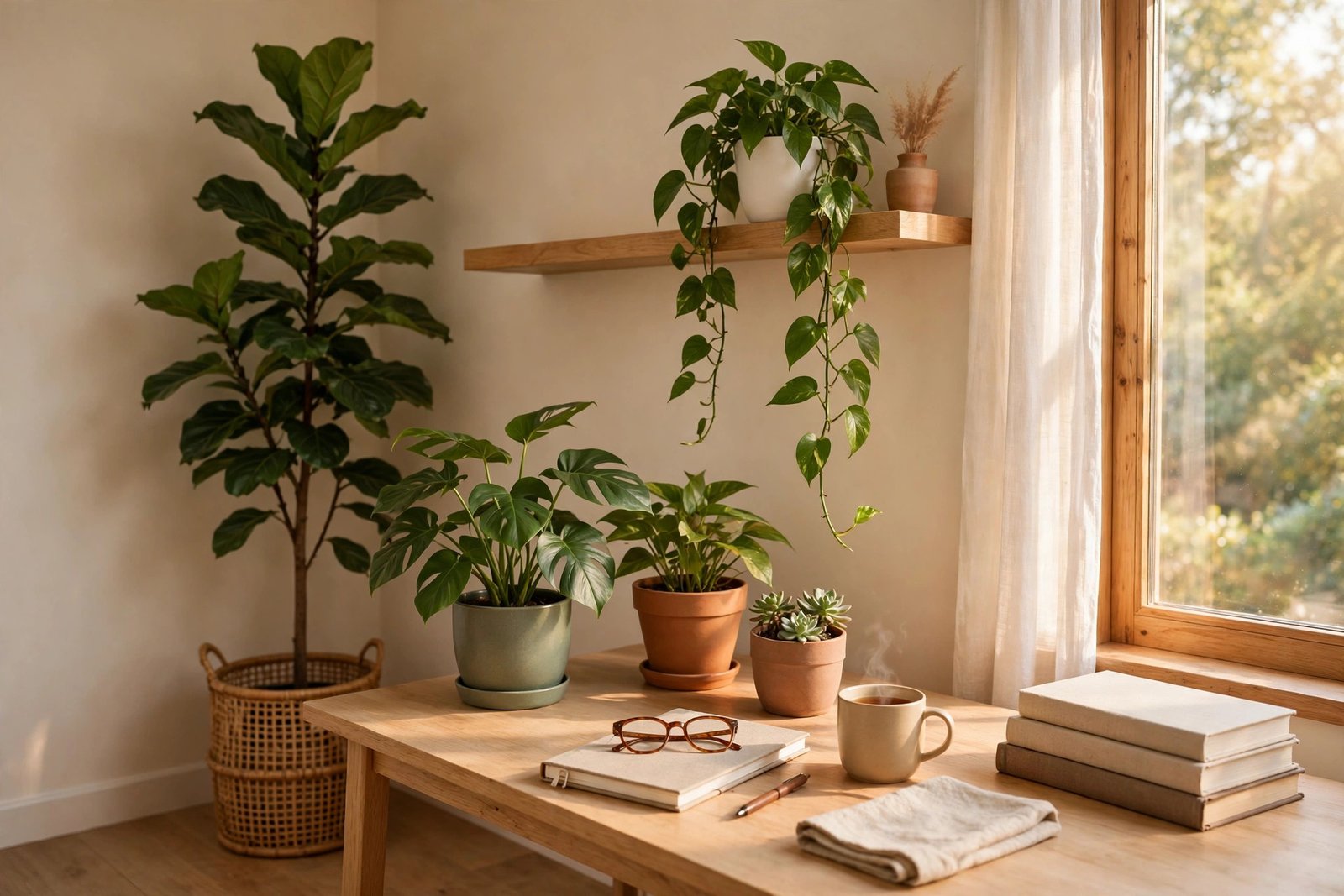
Flat rows of similar pots look like a shop shelf. Layers look like a garden. Build the corner in three heights:
- One tall plant at the back — a floor plant or a plant on a stand — to give the corner height and a backdrop.
- One or two medium plants in the middle, on the desk edge, a low shelf, or a small stool, at roughly keyboard-to-screen height.
- One trailing plant up high, on a shelf or the top of a bookcase, with stems falling down the side of the group.
Odd numbers and uneven heights look natural; a strict line of matching pots at one height does not. Leave small gaps between pots so each plant keeps its shape and air can move around the leaves. If a plant starts leaning towards the light, rotate it a quarter turn each week so it grows evenly on all sides.
Keep Pots, Trays and Soil Under Control
Most plant-corner mess is pot mess. Mixed plastic pots in five colours make even healthy plants look untidy. You do not need expensive pots: pick one or two finishes — plain terracotta, white, or a single colour — and use simple cover pots over the plastic nursery pots. The corner instantly looks planned.
Stand grouped pots on a tray, a shallow crate, or a washable mat. Trays catch drips and soil, protect the desk or floor underneath, and let you slide the whole group aside for cleaning. Keep the soil surface tidy too: a thin layer of small stones or bark on top of the soil looks neat and stops soil splashing out when you water. Choose plants that forgive a missed watering — our list of low-maintenance office plants for people who forget them is a good starting point for corner plants that stay good-looking with basic care.
Give the Corner a Boundary
A tidy corner stays tidy when it has edges. Decide how much of the corner the plants may occupy — one shelf and the floor space below it, say — and hold that line. New plants join only when an old one leaves. Trailing stems get trimmed or trained along the shelf edge when they reach for the desk, the lamp, or the floor.
Keep the work surface out of the arrangement. If desk space is tight, let the corner live on a shelf, a stand, and the floor, and keep at most one small plant on the desk itself. Our guide to small desk plants that do not take over your workspace helps you pick that one desk plant by size and habit. A clear border between the plant corner and the work zone is what makes both of them look intentional.

Keep a Small Care Kit Hidden Nearby
Corners get messy when care tools live somewhere else and care gets postponed. Keep a tiny kit in a box, a drawer, or behind the tallest pot: a small watering can or bottle, a soft cloth for leaves, small scissors or snips for dead leaves and stems, and a few spare ties for trailing plants. When everything is within reach, the weekly tidy takes minutes instead of becoming a project.
Water at the sink or with a tray underneath where you can, and let pots drain fully before they go back. Saucers and trays only stay tidy if they are emptied; a tray of standing water is how a neat corner starts to smell and attract problems. Empty, rinse, and reset — thirty seconds that protect the whole display.
The Two-Minute Weekly Tidy
Once a week, ideally on the same day you water, run through one short routine: pick off dead or yellowing leaves, wipe dust from broad leaves with the cloth, rotate each pot a quarter turn, trim any stem crossing its boundary, and check the tray for drips or fallen soil. Dusty leaves are the quiet detail that separates a styled corner from a neglected one — clean leaves also take in light better, which keeps growth compact and tidy.
Once a month, step back and look at the corner as a whole, the way a visitor would. Rebalance heights if one plant has outgrown its layer, swap a struggling plant out for a healthier one from elsewhere in the home, and prune with the display in mind, not just the individual plant.
Mistakes to Avoid
- Scattering plants all over the room. Single plants dotted around read as clutter and make watering a chore. One strong group looks better and is easier to care for.
- Choosing the corner by empty space, not light. A dim corner slowly ruins the plants, and weak, stretched plants never look tidy.
- Too many plants. Past five or so, most corners crowd, shade each other, and spill into the work zone.
- Mismatched pots with no trays. Mixed colours and drip-stained surfaces undo the display. One or two finishes, on trays, keep it clean.
- Letting trailing plants roam. Untrimmed stems swallow lamps, shelves, and desk edges. Trim or train them at the corner’s boundary.
- Skipping the weekly tidy. Dead leaves, dust, and drips accumulate quietly. Two minutes a week is the whole secret.
Frequently Asked Questions
How many plants does a green office corner need?
Three to five is the sweet spot for most home offices: one tall, one or two medium, and one trailing plant give you layers without crowding. A small desk corner can work with three; a floor corner by a window can take five comfortably.
What if my only free corner is dark?
Be honest about the light. Either choose plants sold for low light and accept slower growth, move the corner to a brighter spot even if it means moving furniture, or put the plants on a shelf near the window instead of in the dark corner. Arrangement cannot replace light.
How do I stop the corner damaging my desk or floor?
Stand every pot on a tray or saucer, keep nursery pots inside cover pots, water carefully and let pots drain before returning them, and check trays weekly. Most damage comes from drips sitting unnoticed, not from the plants themselves.
How do I keep trailing plants tidy?
Give them a set path — along a shelf edge or down one side of the group — and trim any stem that crosses into the desk area, the lamp, or the floor. A few small clips or ties keep the path in place, and a quick trim during the weekly tidy stops it becoming a big job.
Conclusion
A green office corner stays tidy when it is built like a display, not a collection: a bright corner, three to five plants in three layers, pots in one or two finishes standing on trays, a clear boundary the plants do not cross, and a hidden care kit that makes the weekly two-minute tidy effortless. Build it once with that structure, and the corner keeps itself looking arranged.